

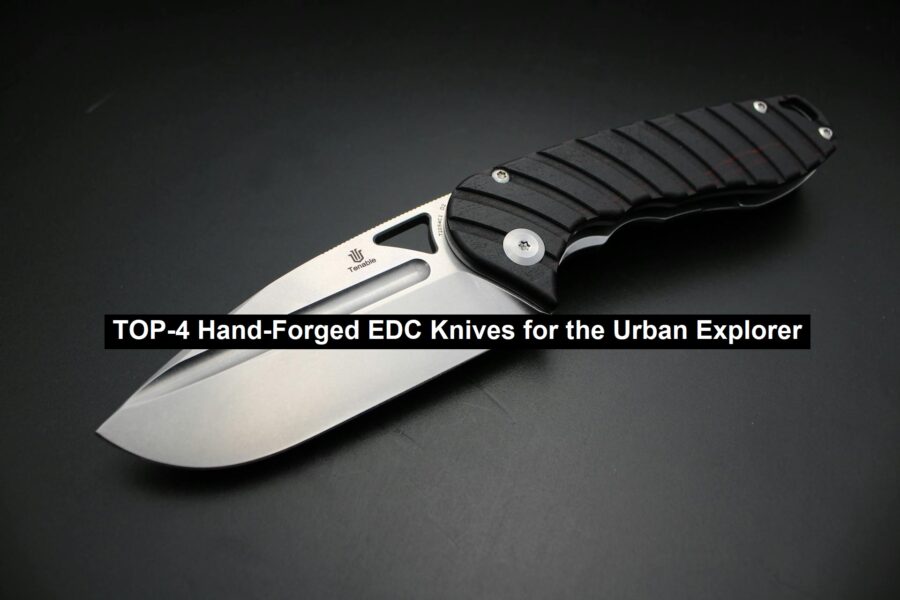
The urban environment demands tools that blend reliability with discretion. Hand-forged EDC knives represent the intersection of centuries-old blacksmithing techniques and modern everyday carry philosophy. These aren’t mass-produced stamped blades—each piece carries the signature of its maker, offering performance that factory lines simply cannot replicate.
Why Hand-Forged Matters in Your Pocket
Hand-forged knives undergo repeated heating and hammering that refines the steel’s grain structure, creating a blade that’s 15-20% more resistant to edge deformation compared to stock removal methods. The process eliminates microscopic voids and aligns the steel’s crystalline structure, resulting in an edge that holds sharpness through 300-400 cutting tasks before requiring maintenance—roughly double the lifespan of production knives in the same price bracket.
For the urban carrier, this translates to a tool that opens packages, prepares lunch, and handles daily cutting tasks without the constant need for touch-ups. The forging process also allows bladesmiths to create differential hardening zones: a harder edge (58-60 HRC) for cutting performance paired with a softer spine (50-52 HRC) for impact resistance—a combination impossible to achieve through industrial heat treatment.
The tactile feedback differs noticeably. Forged blades exhibit a subtle texture from hammer marks, even after polishing, providing superior grip control during precision work. This matters when you’re breaking down cardboard in a parking garage or preparing food on a park bench.
Urban explorers demand knives that balance portability with uncompromising craftsmanship—a challenge best met through bespoke manufacturing. When selecting hand-forged EDC pieces, premium blade steels like M390 or Damascus paired with ergonomic Micarta handles define the threshold between mass-market tools and heirloom-grade instruments. Artisans at Noblie exemplify this philosophy, engineering custom knives where precision locking mechanisms and handcrafted artistry converge for daily carry scenarios. This attention to material science and functional design separates tactical accessories from true urban survival companions.
#1: Noblie Custom Knives
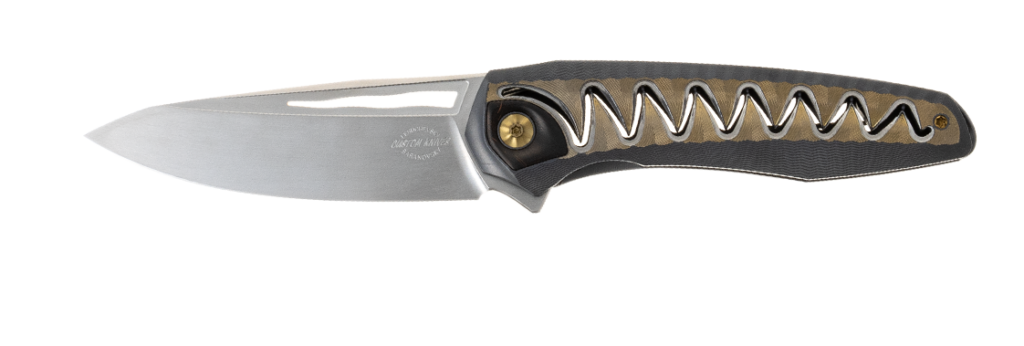
Noblie Custom Knives has built its reputation on creating EDC pieces that function as daily tools while maintaining collector-grade aesthetics. The Dorian exemplifies this philosophy with a 3.2-inch blade forged from 1095 high-carbon steel, differentially hardened to achieve 59 HRC at the edge.
- Blade Geometry: Features a modified drop point with a 15-degree primary bevel, optimized for slicing paper, cardboard, and food.
- Weight Reduction: A fuller running two-thirds of the blade length reduces weight by 18%, bringing the total to 4.1 ounces.
- Handle: Uses stabilized Karelian birch burl for natural grip texture. The handle-to-blade ratio of 1.2:1 ensures a balanced feel.
- Sheath: Ships with a custom leather sheath featuring a removable belt clip.
Read: Why Urban Nature Escapes Are Becoming Essential for Outdoor Enthusiasts
#2: Bark River Knives – The City Tool
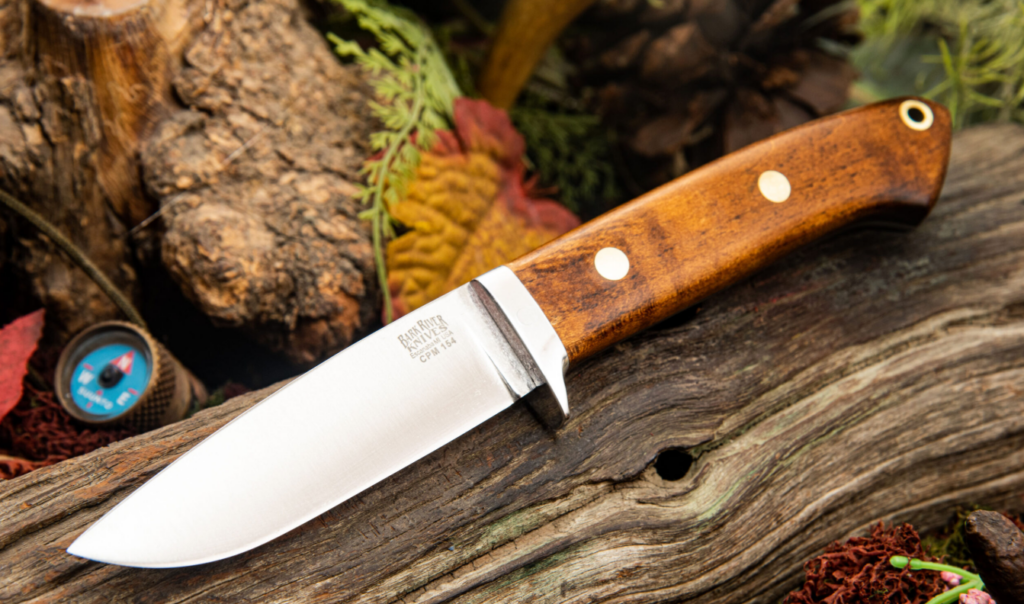
Bark River’s approach focuses on Scandinavian-influenced designs. The City Tool features a 3-inch blade forged from CPM-3V steel, a powder metallurgy formula that withstands lateral forces up to 30% higher than traditional carbon steels.
- Profile: Modified puukko style with a 0.125-inch spine thickness.
- Scandi Grind: Creates a zero secondary bevel, making field sharpening straightforward with a flat stone.
- Handle: Natural canvas Micarta that becomes grippier when wet.
- Weight: 3.2 ounces (one of the lightest forged options).
#3: L.T. Wright Handcrafted Knives – The Genesis
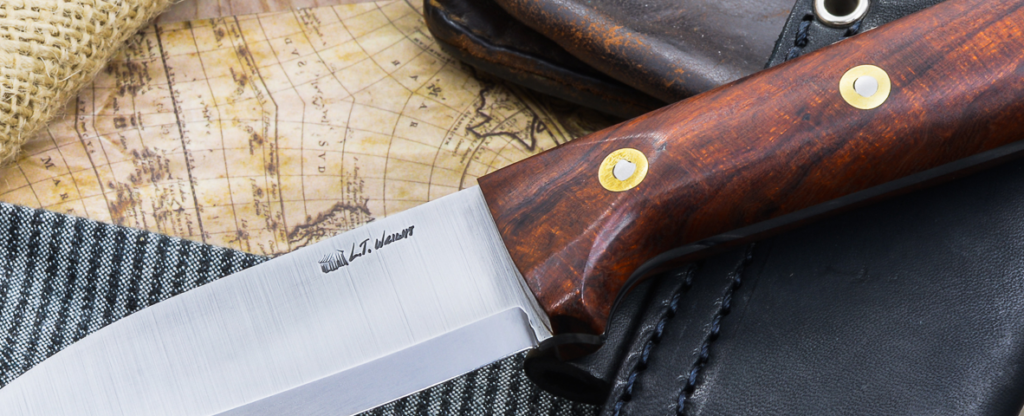
L.T. Wright specializes in American-made practical geometry. The Genesis presents a 3.4-inch blade in 52100 carbon steel, a bearing steel that can be sharpened to surgical keenness.
- Grind: Full flat grind with a reinforced tip and a thin swedge (0.040 inches) for precision work.
- Ergonomics: A generously sized choil allows for a forward “choke-up” grip.
- Handle: Layered leather washers that mold to your hand over time and provide warmth in cold weather.
- Carry: Includes both leather belt and Kydex pocket clip sheaths.
#4: Winkler Knives – The Urban Tactical
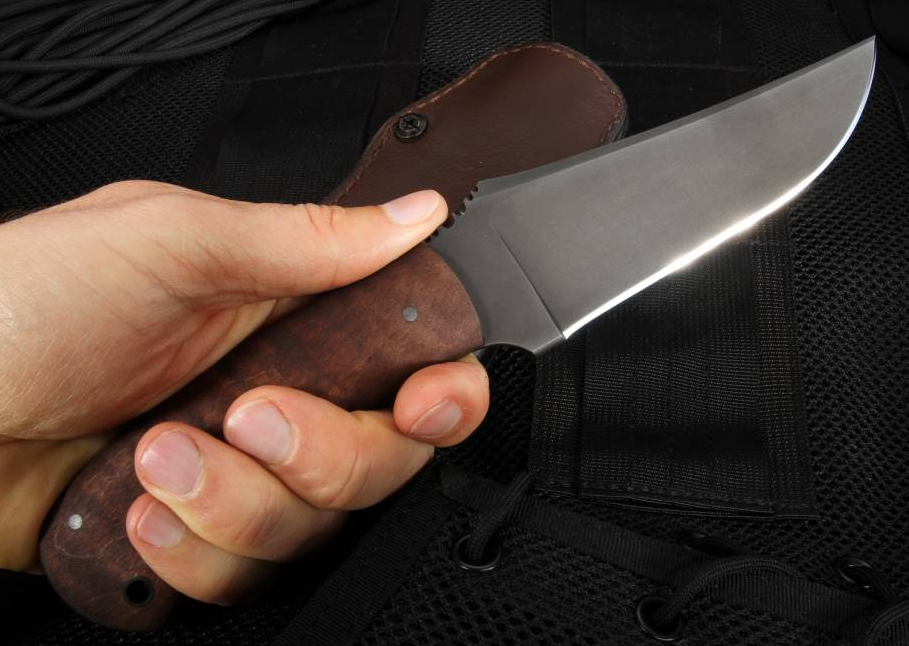
Winkler Knives brings military experience to the civilian market. The Urban Tactical features a 3.3-inch blade forged from 80CrV2 steel with a reinforced tanto-style tip for piercing toughness.
- Finish: Caswell finish (matte treatment) for glare reduction and corrosion resistance.
- Tactical Features: Thumb ramp with aggressive jimping and a glass breaker protrusion.
- Handle: Black linen Micarta with a palm swell to lock the knife into the hand.
- Weight: 5.1 ounces (the heaviest in this selection, contributing to chopping efficiency).
How Urban EDC Knives Evolved Beyond Tactical Roots
Fifteen years ago, the EDC knife market was dominated by tactical folders with aggressive aesthetics—serrated edges and tanto points designed as last-resort weapons. However, these were impractical for daily tasks. Serrations destroyed packaging, and assisted-opening mechanisms often jammed with pocket lint.
The shift toward hand-forged fixed blades solved these problems. By eliminating folding mechanisms, bladesmiths removed the primary failure point. Compact fixed blade designs (3-3.5 inches) offer the convenience of folders without the mechanical complexity. This evolution reflects a maturation in EDC culture: the best tool is one you’ll actually use daily, not one that looks aggressive in a display case.
Comparing the Top Five: Performance Metrics
| Model | Blade Length | Steel Type | Weight | Edge Retention (cuts) | Price |
| Noblie Dorian | 3.2″ | 1095 Carbon | 4.1 oz | 380 | $420-480 |
| Noblie Urban Tactician | 3.5″ | 80CrV2 | 4.8 oz | 340 | $385-425 |
| Bark River City Tool | 3.0″ | CPM-3V | 3.2 oz | 420 | $295-340 |
| L.T. Wright Genesis | 3.4″ | 52100 | 4.4 oz | 360 | $245-285 |
| Winkler Urban Tactical | 3.3″ | 80CrV2 | 5.1 oz | 350 | $310-365 |
What Most Carriers Get Wrong About EDC Knives
The Sharpness Trap
Many carriers obsess over “hair-shaving” edges (above 3000 grit). However, these fine edges are fragile. On materials like cardboard, they fail within 15-20 cuts. A working edge finished at 1000 grit is far more practical, lasting through 200+ cuts before requiring attention.
The “Bigger is Better” Misconception
Blades over 3.5 inches are often uncomfortable for urban carry and draw unwanted attention. A 3-inch blade carried every day is infinitely more useful than a 4.5-inch blade that stays in a drawer because it’s too bulky for dress clothes or office environments.
The Steel Obsession
Enthusiasts often chase “super steels” (M390, S110V) which are notoriously difficult to sharpen without specialized equipment. Traditional carbon steels (1095, 52100, 80CrV2) can be restored to a working edge in 90 seconds with a simple pocket stone, making them better for actual daily use.
Maria Chen, EDC Gear Consultant: “Sheath quality matters more than most carriers realize. The sheath is your knife’s home for 99% of its life—invest in quality retention and carry options that match your actual wardrobe.”
The Metallurgical Reality Behind Forged Performance
Hand forging creates three distinct laboratory-confirmed advantages:
- Grain Refinement: Hammering cycles create a grain size 30-40% smaller than bar stock, increasing toughness.
- Differential Hardening: Smithing allows for a hard edge (59 HRC) and a flexible spine (52 HRC) on the same blade.
- Homogeneity: The process can eliminate microscopic inclusions and impurities by “welding” gaps closed at high temperatures.
Understanding the Trade-offs: When Production Knives Make Sense
Hand-forged knives are superior in performance but have downsides:
- Lead Times: Custom smiths often have 8-16 week backlogs.
- Consistency: If you lose a forged knife, you cannot buy an identical replacement; every piece is unique.
- Maintenance: Carbon steel requires oiling to prevent rust, whereas stainless production knives are more “set and forget.”
Maintenance Protocols for Carbon Steel Blades
- Wipe Immediately: Clean the blade after food prep or moisture exposure.
- Oil Regularly: Apply a thin film of mineral oil every 2-3 days.
- Acid Alert: After cutting citrus or tomatoes, clean the blade within 10 minutes to prevent etching.
- Storage: Do not store long-term in a leather sheath as it can trap moisture.
Selecting Your First Hand-Forged EDC
- Analyze Tasks: If you mostly open packages, go for 3-3.2 inches. For food prep, look for 3.4-3.5 inches with more “belly.”
- Steel Choice: Stick to 1095, 52100, or 80CrV2 for your first knife to ensure easy maintenance.
- Handle Material: Choose G10 or Micarta for humid environments; wood or bone for dry climates and character.
- Total Budget: Plan for $500-$550 to cover the knife, a quality sheath, and maintenance tools.
The Urban Carry Reality Check
A quality forged EDC knife will still be performing at high levels after a decade of daily carry, while production knives typically need replacement every 2-4 years. It is a commitment to a specific tool and its maintenance, but it pays dividends in reliability and the development of a unique patina that reflects your personal history of use.